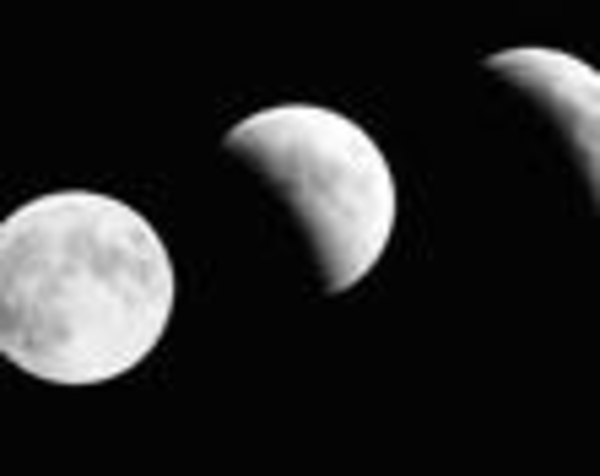
A photo provided by NASA shows a total lunar eclipse beginning as the full moon is shadowed by the Earth on the arrival of the winter solstice, Tuesday, December 21, 2010 in Arlington, VA. From beginning to end, the eclipse will last about three hours and twenty-eight minutes. (AP Photo/NASA/Bill Ingalls)
http://www.nasa.gov/topics/solarsystem/features/watchtheskies/index.html
NEW YORK, N.Y. - Skywatchers got an early holiday present this year: A total eclipse of the moon.
Hanging high in the sky, the moon slowly turned from bright silver into a red disk early Tuesday.
A total lunar eclipse occurs when the Earth casts its shadow on the full moon, blocking the sun's rays that otherwise reflect off the moon's surface. Some indirect sunlight still pierces through to give the moon its eerie hue.
The 3 1/2 hour celestial spectacle was visible from North and Central America where skies were clear. Portions of Europe and Asia only caught part of the show.
The totality phase — when the moon was completely immersed in Earth's shadow — lasted 72 minutes.
Since the year's only total lunar eclipse coincided with winter solstice, the moon glowed high in the sky.
The last time this occurred was more than three centuries ago on Dec. 21, 1638. It will happen again on Dec. 21, 2094, according to U.S. Naval Observatory spokesman Geoff Chester.
Lunar eclipses are safe to watch with the naked eye, unlike solar
http://ca.news.yahoo.com/clarification-tot...
 Posted By: Jen Fad
Tuesday, December 21st 2010 at 12:37PM
You can also
click
here to view all posts by this author...